

20. Test: overclock ed overvolt
- 1. Introduzione: Sapphire

- 2. Sapphire Radeon R9-290X: specifiche tecniche
- 3. Hawaii: architettura nei dettagli

- 4. Hawaii: gestione dei clock dinamica
- 5. Hawaii: Eyefinity reinterpretato
- 6. Hawaii: TrueAudio, innovazione a 360°
- 7. Hawaii: Mantle, asso nella manica?
- 8. Galleria fotografica: la scheda nei dettagli
- 9. Configurazione di prova e metodologia di test
- 10. Test sintetici: Unigine Heaven
- 11. Test sintetici: FutureMark 3DMark11
- 12. Test sintetici: FutureMark 3DMark
- 13. Test sintetici: 3DMark Fire Strike Extreme
- 14. Test sintetici: AllBenchmark CatZilla
- 15. Test sui giochi: Thief (2014)
- 16. Test sui giochi: Bioshock Infinite
- 17. Test sui giochi: Batman: Arkham Origins
- 18. Test sui giochi: Metro Last Light
- 19. Test sui giochi: Tomb Raider (2013)
- 20. Test: overclock ed overvolt
- 21. Considerazioni finali

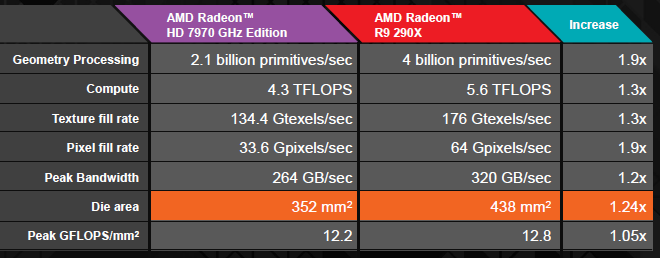
Avendo a disposizione una scheda del genere, le mani fremono aspettando di overclockarla e tirarla al limite, qualsiasi sia il mezzo di raffreddamento a disposizione. Nel nostro caso, il dissipatore stock ha limitato (non tanto sulla temperatura GPU, quanto su quella dei VRM, che hanno sfiorato i 100°C anche con ventola al 100%) in parte l’overclockabilità della scheda, facendoci però raggiungere il seguente risultato:
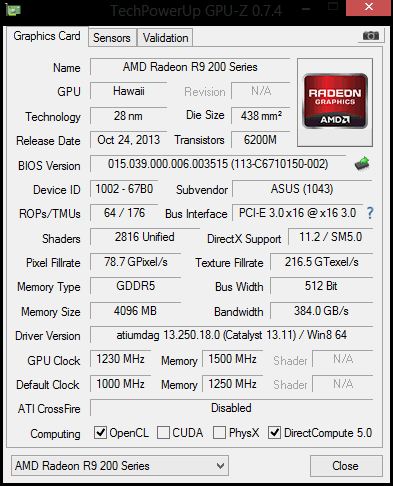
Come potrete notare, il Subvendor della scheda è Asus. Non è un errore: al momento non esistono versioni di Afterburner o di TriXX che consentano overclock ed overvolt spinti sulle R9-290/290X, per cui abbiamo flashato il bios della Asus R9-290X permettendo così l’utilizzo di GPU Tweak, con vGPU impostabile fino a 1.41v. In realtà, il vGPU effettivo era molto inferiore (poco superiore ad 1.30v), per via del forte vDrop che a quanto pare è un meccanismo voluto per non friggere le schede, già molto bollenti di per sé. Da notare inoltre il bandwidth ottenuto con le memorie: ben 384GB/s, grazie al bus a 512 Bit e alle memorie GDDR5!
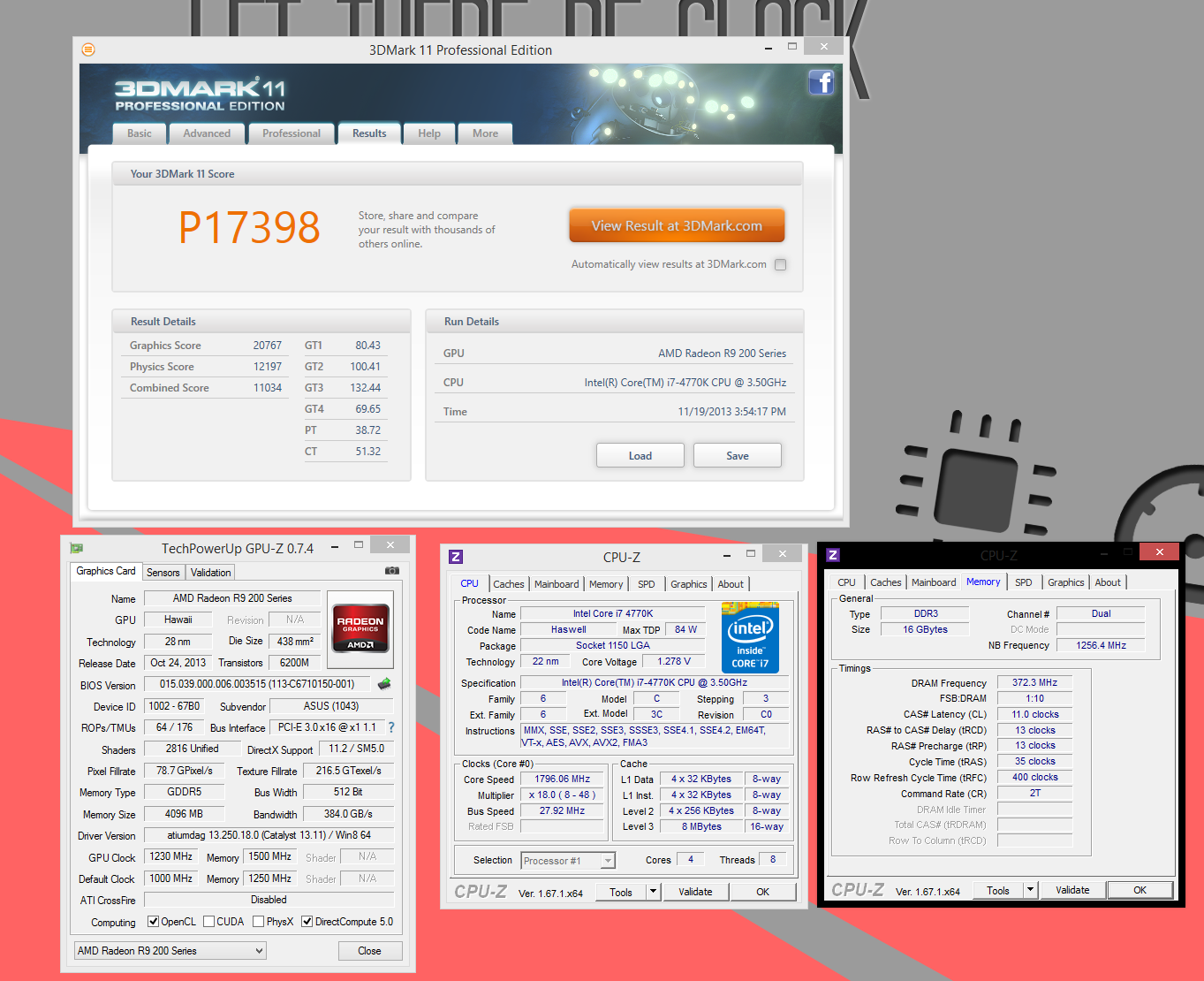
Il risultato? Eccolo:
Bar chart. Data table with 31 rows and 3 columns follows.
| Default | OC | |
|---|---|---|
| Sapphire Radeon R7 250 Ultimate | 3.346 | |
| NVIDIA GeForce GTX750Ti | 5.699 | 6.264 |
| ASUS GeForce GTX750Ti DirectCU II OC | 6.027 | 6.669 |
| MSI Radeon HD7790 OC | 6.079 | 7.800 |
| Sapphire Radeon R7 260X OC 2GB | 6.741 | 7.741 |
| Sapphire Radeon R7 265 Dual-X | 7.097 | 9.906 |
| MSI Radeon R9 270 Gaming 2GB | 8.079 | 9.928 |
| NVIDIA GeForce GTX760 | 8.273 | 9.380 |
| Gigabyte GeForce GTX760 WF3 OC 4GB | 8.656 | 9.258 |
| Sapphire Radeon R9 270X Vapor-X | 8.939 | 10.631 |
| ASUS Radeon R9 270X DirectCU II TOP | 9.120 | 11.246 |
| MSI GeForce GTX760 Hawk | 9.294 | 9.872 |
| Sapphire Radeon R9 280 Dual-X | 9.360 | 13.300 |
| Sapphire Radeon HD7970 DualX OC | 9.963 | |
| NVIDIA GeForce GTX770 | 10.446 | 12.027 |
| Sapphire R9 285 ITX Compact | 10.558 | 12.262 |
| MSI GeForce GTX770 Gaming | 11.244 | 12.067 |
| Gigabyte GeForce GTX770 WF3 OC | 11.414 | 12.195 |
| Sapphire Radeon R9 280X Toxic | 11.603 | 13.813 |
| MSI GeForce GTX780 OC Gaming | 12.726 | 13.310 |
| NVIDIA GeForce GTX780 | 12.848 | 14.117 |
| Sapphire Radeon R9 290 | 13.311 | 16.206 |
| Inno3D GeForce GTX780 iChill Accelero Hybrid | 13.736 | 14.183 |
| NVIDIA GeForce GTX780Ti | 13.956 | 15.663 |
| Sapphire Radeon R9 290X | 14.006 | 17.398 |
| Sapphire Radeon R9 290X Tri-X OC | 14.263 | 15.793 |
| Sapphire Radeon R9 290X Vapor-X Tri-X OC | 14.534 | 17.384 |
| MSI GeForce GTX780Ti Gaming | 14.832 | 15.698 |
| Sapphire Radeon HD7990 | 15.047 | |
| Sapphire Radeon HD7970 DualX OC CFX | 16.360 | 18.463 |
Risultato con cui superiamo il precedente record di team, fermo a “soli” 14000 punti circa ottenuti con un nVidia GTX 780 reference (recensita da noi nei mesi scorsi). Un bel salto in avanti che fa guadagnare preziosi punti verso la scalata alle prime posizioni internazionali dei team di overclock, senza contare il vantaggio non indifferente in prestazioni rispetto alla scheda non overclockata.
20. Test: overclock ed overvolt
- 1. Introduzione: Sapphire
- 2. Sapphire Radeon R9-290X: specifiche tecniche
- 3. Hawaii: architettura nei dettagli
- 4. Hawaii: gestione dei clock dinamica
- 5. Hawaii: Eyefinity reinterpretato
- 6. Hawaii: TrueAudio, innovazione a 360°
- 7. Hawaii: Mantle, asso nella manica?
- 8. Galleria fotografica: la scheda nei dettagli
- 9. Configurazione di prova e metodologia di test
- 10. Test sintetici: Unigine Heaven
- 11. Test sintetici: FutureMark 3DMark11
- 12. Test sintetici: FutureMark 3DMark
- 13. Test sintetici: 3DMark Fire Strike Extreme
- 14. Test sintetici: AllBenchmark CatZilla
- 15. Test sui giochi: Thief (2014)
- 16. Test sui giochi: Bioshock Infinite
- 17. Test sui giochi: Batman: Arkham Origins
- 18. Test sui giochi: Metro Last Light
- 19. Test sui giochi: Tomb Raider (2013)
- 20. Test: overclock ed overvolt
- 21. Considerazioni finali



Discussione su post